
Creative self-assignments to keep your eye trained
Photographers aren’t always inspired. There are days when ideas feel dry and everything looks ordinary through the lens. When this happens, I’ve found it helpful to give myself little missions and simple challenges that push me to look differently at the world.
These small assignments don’t just get me creating again, they help me rediscover the excitement of seeing, they are about keeping the eye trained and the brain alert. When I treat photography like a game it suddenly becomes fun again.
I know there are hundreds of possible assignments out there, so I focused on a few that feel a bit off the beaten path, some that push me to see in ways I wouldn’t normally.
So, here are some of my favorite creative exercises. Here are some of the ones that have worked best for me.
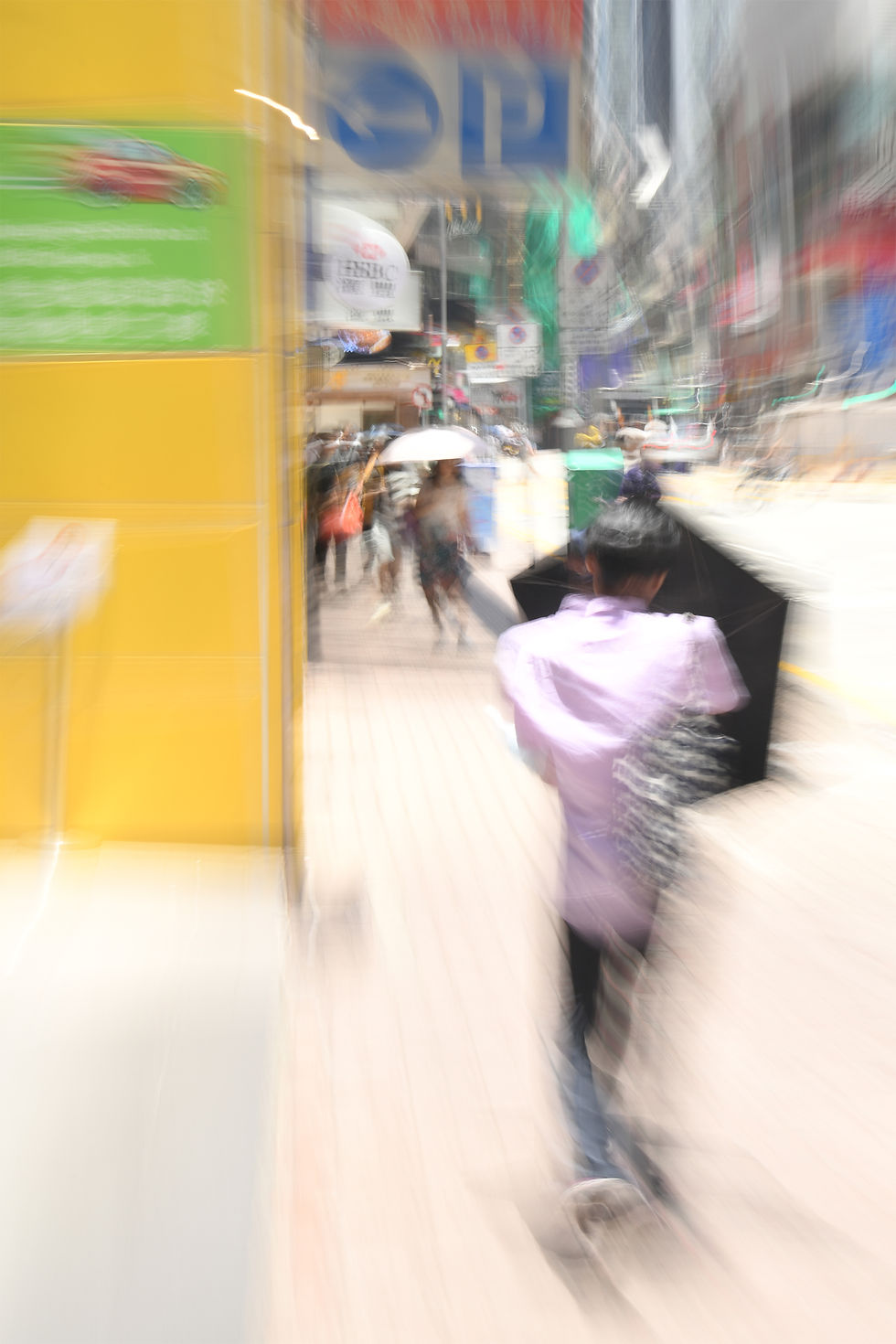
1. Transform a photo into a painting
This is one of my absolute favorite exercises (and I probably overdo it in my own photography, but who cares?). The goal is to treat your camera like a paintbrush and let it do the work. Don’t just capture a scene: paint it.
To make it even more fun, I like picking an artistic period or some of my favorite painters as my “mood board” and try to reproduce their brush strokes with my camera. You like Impressionism? Good: then try to paint like Monet, trying to capture light and color in soft, blurred strokes. Surrealism? Fantastic: then try to echo the precise, dreamlike strokes of Magritte. You love Pointillism? Practice capturing small points of color that come together to form the whole image, like a painting by Seurat.
The possibilities are endless.
Tips and guidelines:
People make some of the best subjects for this exercise, so seek for people walking, running, dancing, or even just shifting positions and capture their motion;
Use long exposures and intentional camera movement to turn colors into brush strokes;
Adjust ISO and shutter speed to control exposure: you might want to keep your ISO low if you’re experimenting with longer shutter speed.
2. Hidden gestures
Work with ordinary architectural or natural surfaces (walls, doors, trees) and look for hidden gestures, small movements, traces of human activity. The goal is not to show the whole person, but to capture moments and gestures that suggest a story. Focus on mood, light and abstraction rather than literal representation of that person.
Tips and guidelines:
Look for traces of movement and capture ephemeral moments: a hand brushing a wall, a footstep, etc.;
Use lights and shadows deliberately: highlight or obscure parts of the surface to reveal just enough for the gesture to appear;
Frame with intention: crop or angle the shot to emphasize the gesture and guide the viewer’s imagination.

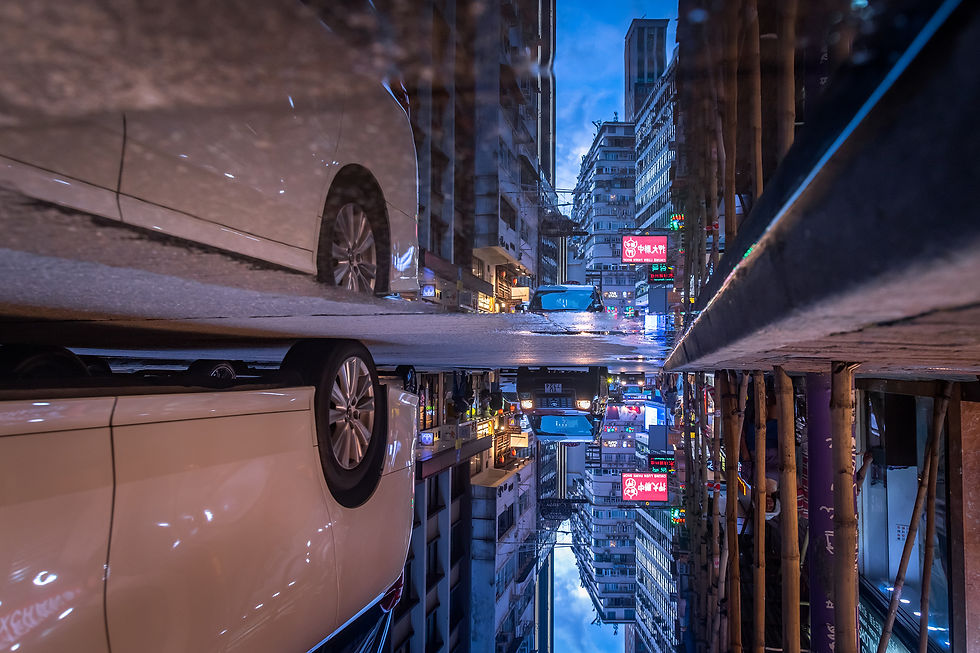
3. Chasing symmetry
Discover the secret balance hiding in ordinary scenes. Sure, you can photograph symmetry in buildings or perfectly aligned tiles, but…isn’t this too easy? The real challenge (sometimes bringing the most interesting results) comes from finding symmetry where it’s not obvious: messy streets, scattered objects, irregular patterns in nature. Look for mirrored shapes, repeated elements and capture them in a way that emphasizes balance and rhythm.
Tips and guidelines:
Look for natural or man-made surfaces that can act as your “mirror”: puddles, windows, tiles, patterned surface and use them as your starting point for your composition;
Experiment with angles, cropping and perspective to enhance or exaggerate symmetry;
Consider near-symmetry or partial symmetry for a slightly surreal or playful effect;
Challenge yourself: hunt for symmetry in unexpected, irregular and chaotic places: that’s where the real visual surprises hide.
4. Conversations in shadow
Focus on the hidden life of shadows, exploring how they interact with each other and with their surroundings. Look for overlaps, reflections, distortions and juxtapositions of shadows around you and try to create a dialogue between them. The goal is not just to capture shadows as shapes, but to reveal the relationships and stories they form in a scene.
Tips and guidelines:
Seek out multiple shadows interacting, crossing, overlapping or merging;
Think of shadows as characters: find or create scenarios where their interactions tell a visual story;
Experiment with scale: use shadows that appear huge or tiny compared to their source to create tension or surprise;
Shadows are not only on walls or floors: find them in water, glass, reflective materials and other surfaces around you.

5. Ordinary as unseen
Take everyday scenes (a corner of a room, a street, a staircase, a kitchen countertop) and transform them into images that feel almost abstract. Focus on shapes, lines, shadows, patterns, letting the familiar become unfamiliar. The goal is to make viewers question what they are seeing.
Tips and guidelines:
Zoom in, crop tightly or use unusual angles to obscure context;
Emphasize geometry, repetition or texture over the literal subject;
Play with light, shadow, and different planes to create ambiguity.

6. Beautiful chaos
Who said a photograph has to be neat or tidy? Go out and seek for disorder, clutter, chaos in everyday life and turn it into something visually compelling. Even a dirty street, a graffiti-covered wall or a chaotic market can become a striking subject if you look at it differently. The challenge is to train your eye to see beauty in what most people would just ignore.
Tips and guidelines:
Don’t try to “clean up” the scene: don’t forget that the mess itself it’s your subject, so try to turn it into something visually balanced;
Try to tell a story just in one frame, capture a scene that conveys a moment, emotion or situation without needing extra context;
Sometimes the beauty of chaos is in a single corner, a texture, or a color that tells the story, so focus on a detail if that tells your story.

These small experiments are not meant to create perfect pictures. They are meant to shake the brain a little and to remind you that photography is not about the camera but about curiosity. Every time I try one of them I find something unexpected, even if it’s just a new way to look at the same boring wall.
When photography feels heavy or serious, play with it.
I believe now you’re desperate for more multiple exposure exercises. Perfect then! In the next article, things get even messier and completely out of control.
So what about you? What strange self-assignments do you give yourself to keep your eyes open and your camera curious when you lack of inspiration?


Comments